ATS Hiregate,
idea to implementation.
An AI-powered resume scanner that reads a job description, scores a resume against it and returns the missing keywords and rewrites that actually move the needle. I took it from a rough idea to a working product using Antigravity — my first serious attempt at vibe coding, and the project where the habit stuck.
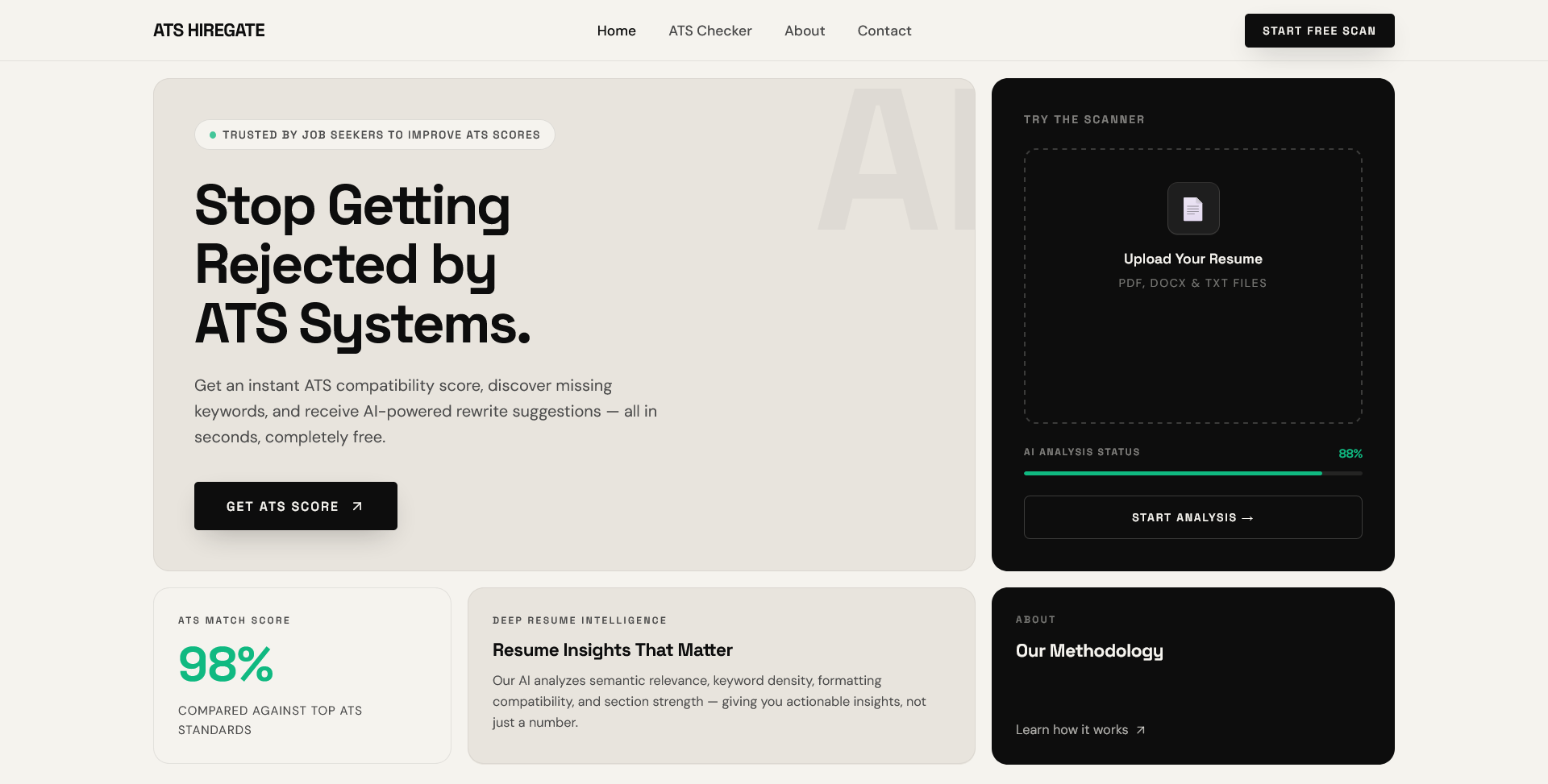
A split hero pairs the core pitch with a live scanner panel, so the value and the tool are visible in the same viewport.
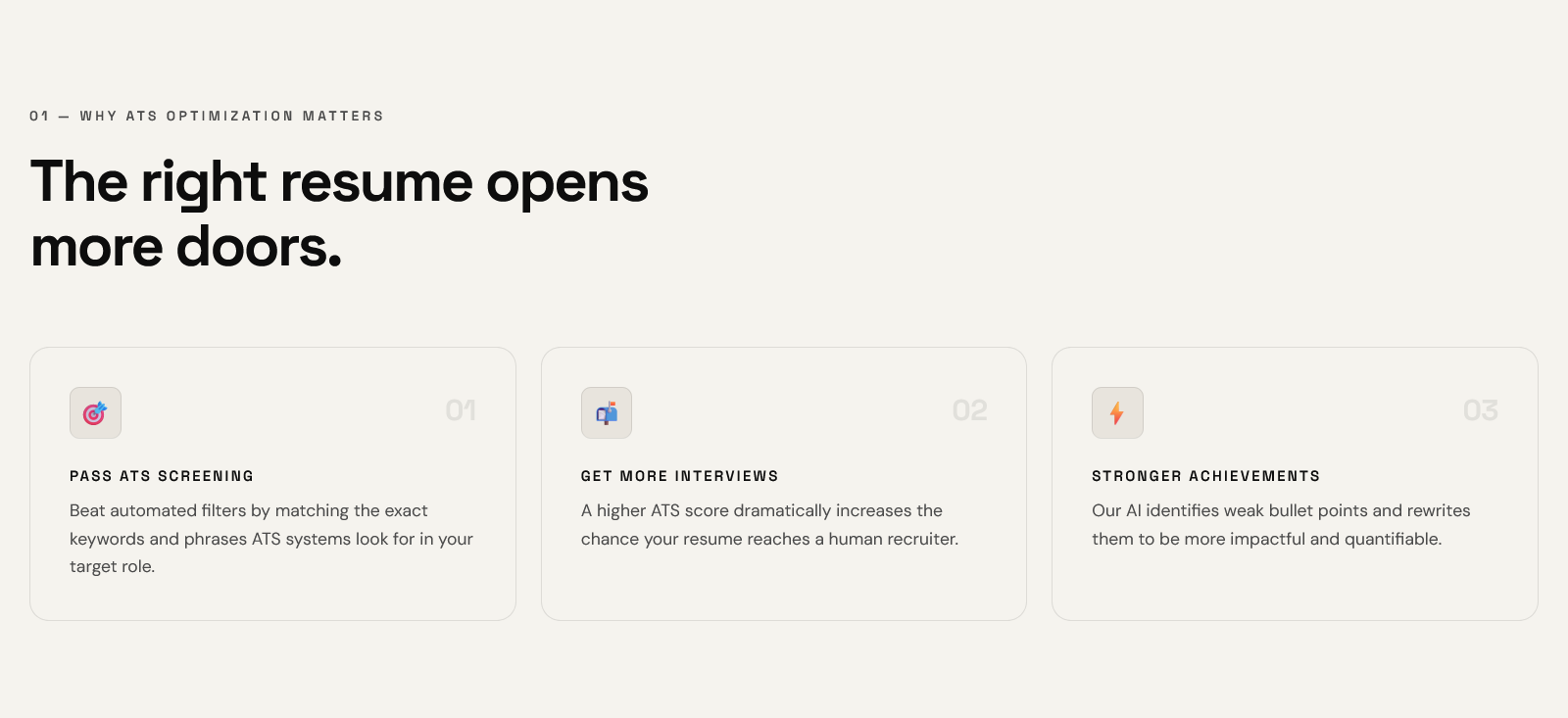
Three numbered cards frame the problem: passing filters, reaching recruiters and sharpening weak bullet points.
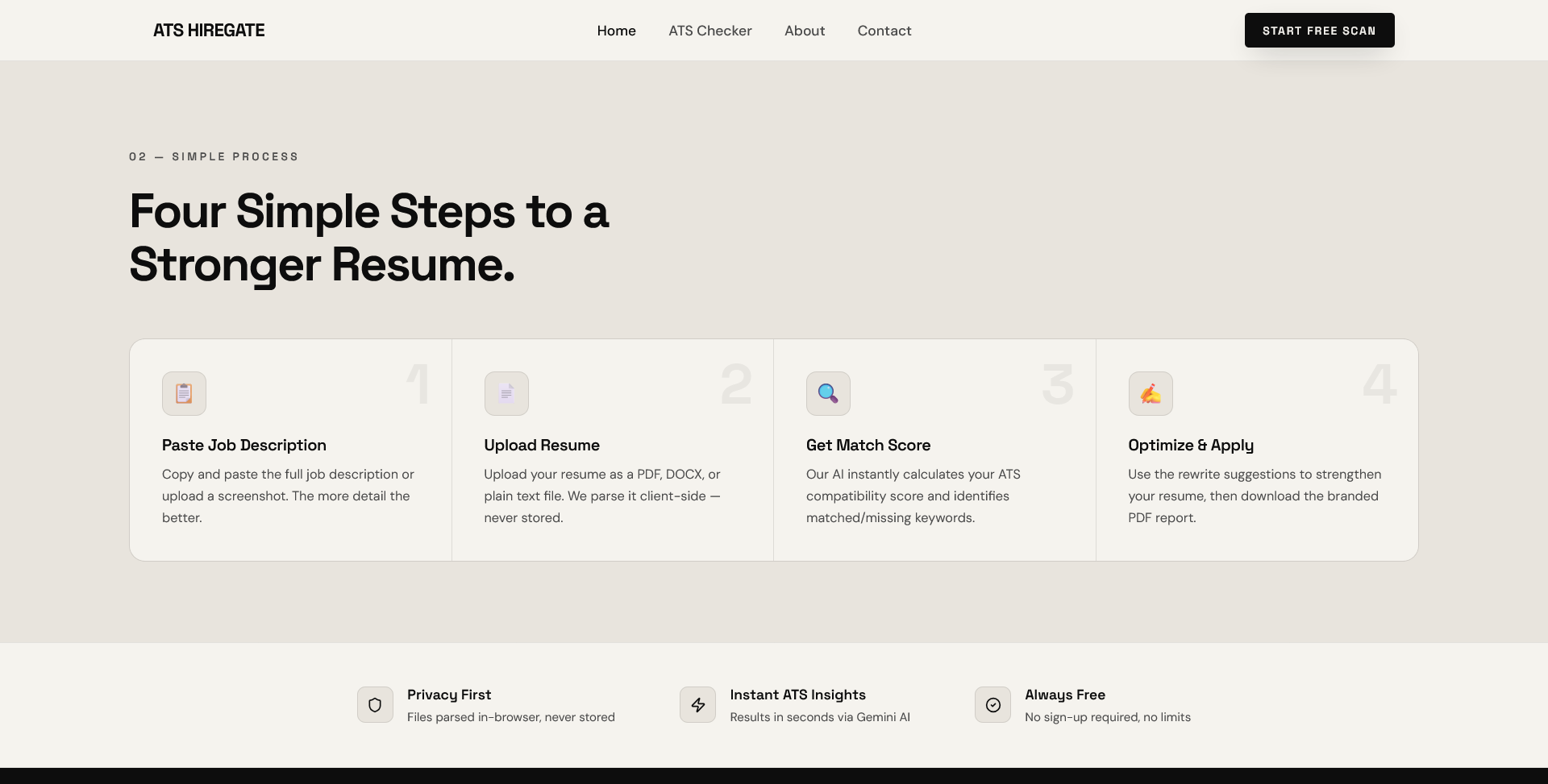
The four-step flow — paste, upload, score, optimise — followed by a strip of trust signals about privacy, speed and cost.
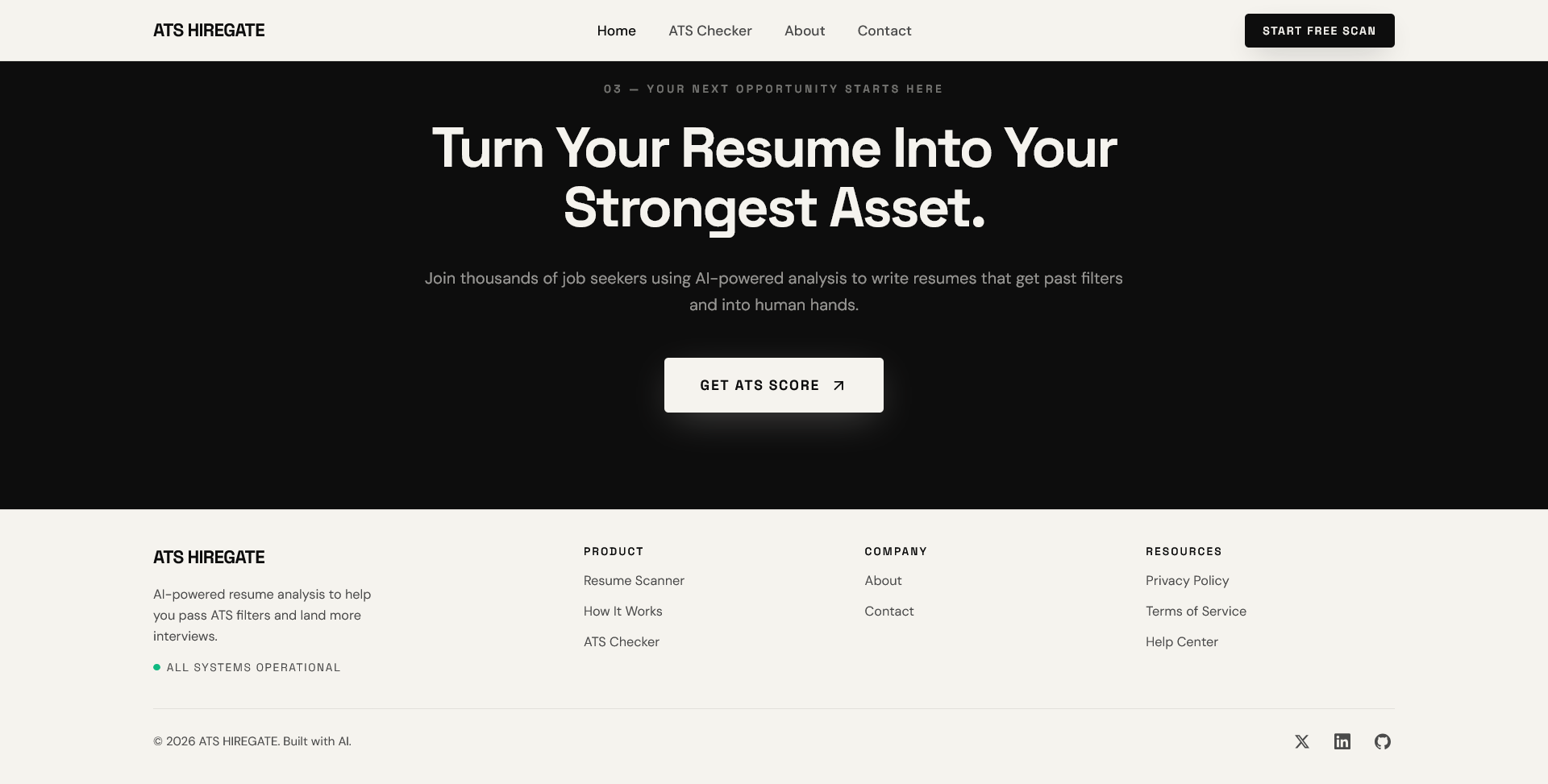
A dark full-bleed band inverts the palette for the final prompt, then hands off to a structured footer.
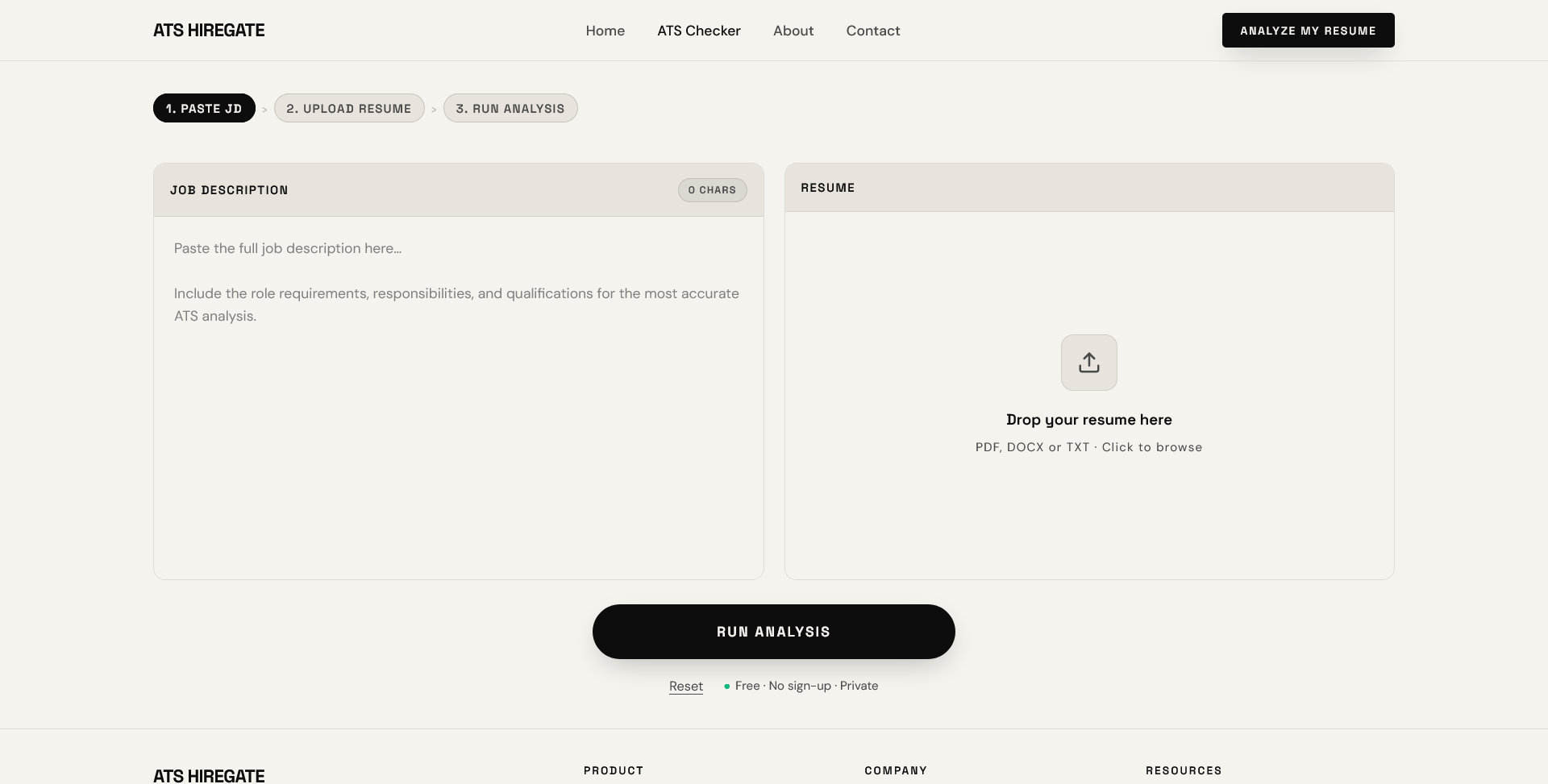
A stepper plus a two-panel workspace: job description on the left, resume drop zone on the right, one primary action below.
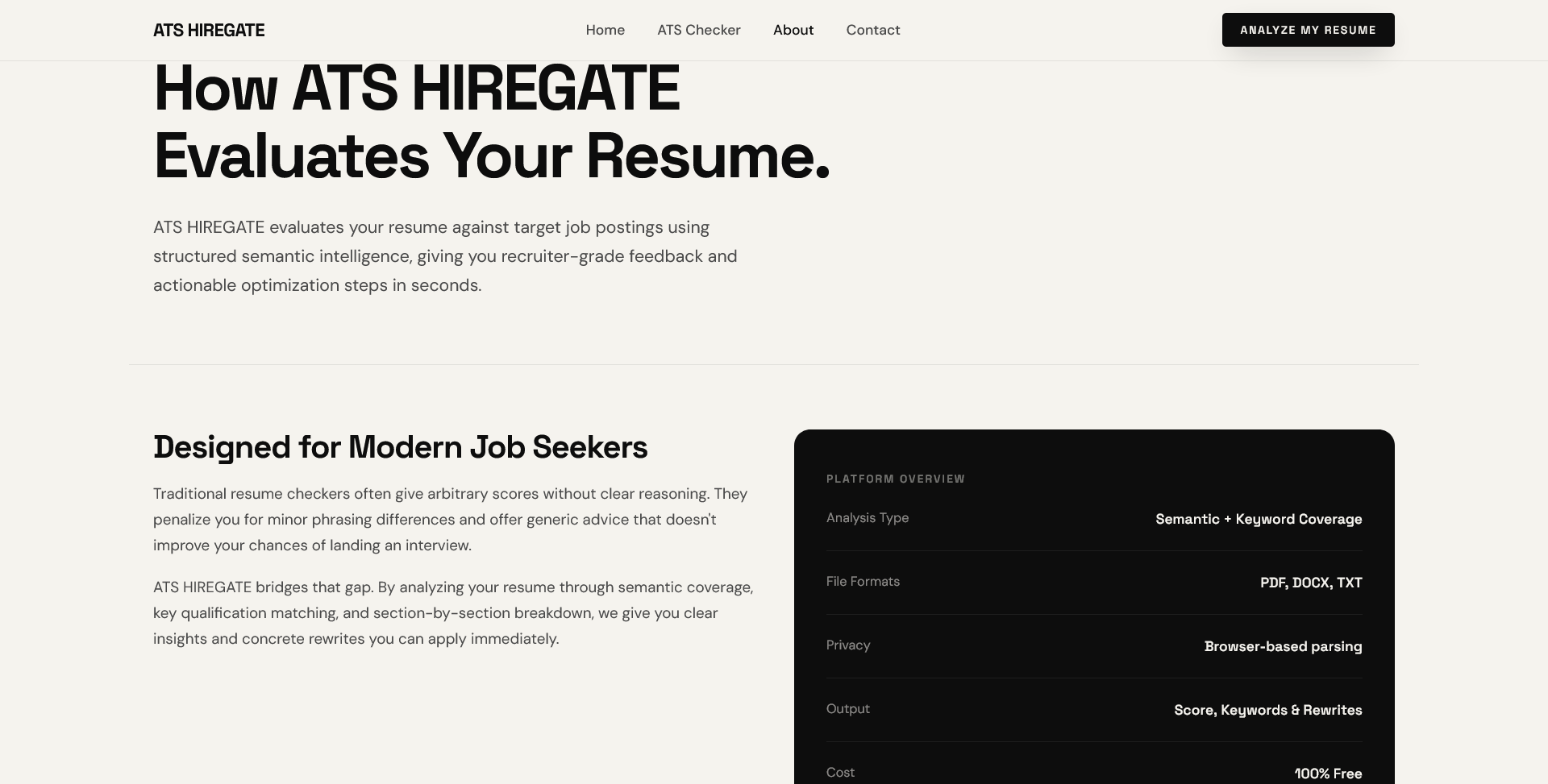
A long-form explanation of the scoring approach, balanced by a dark platform-overview table of formats, privacy and output.
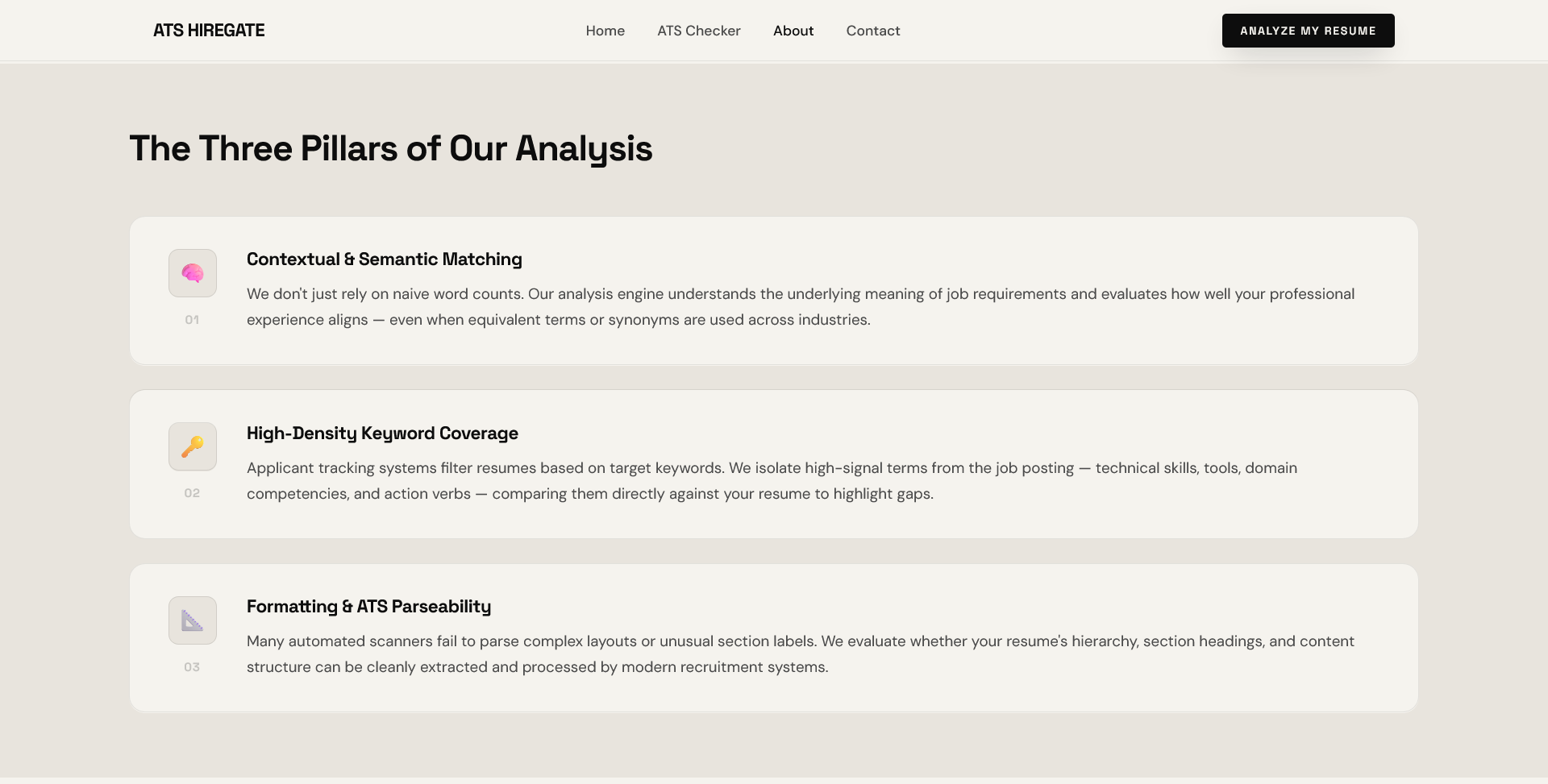
Semantic matching, keyword coverage and formatting parseability, each written out as a full-width numbered row.
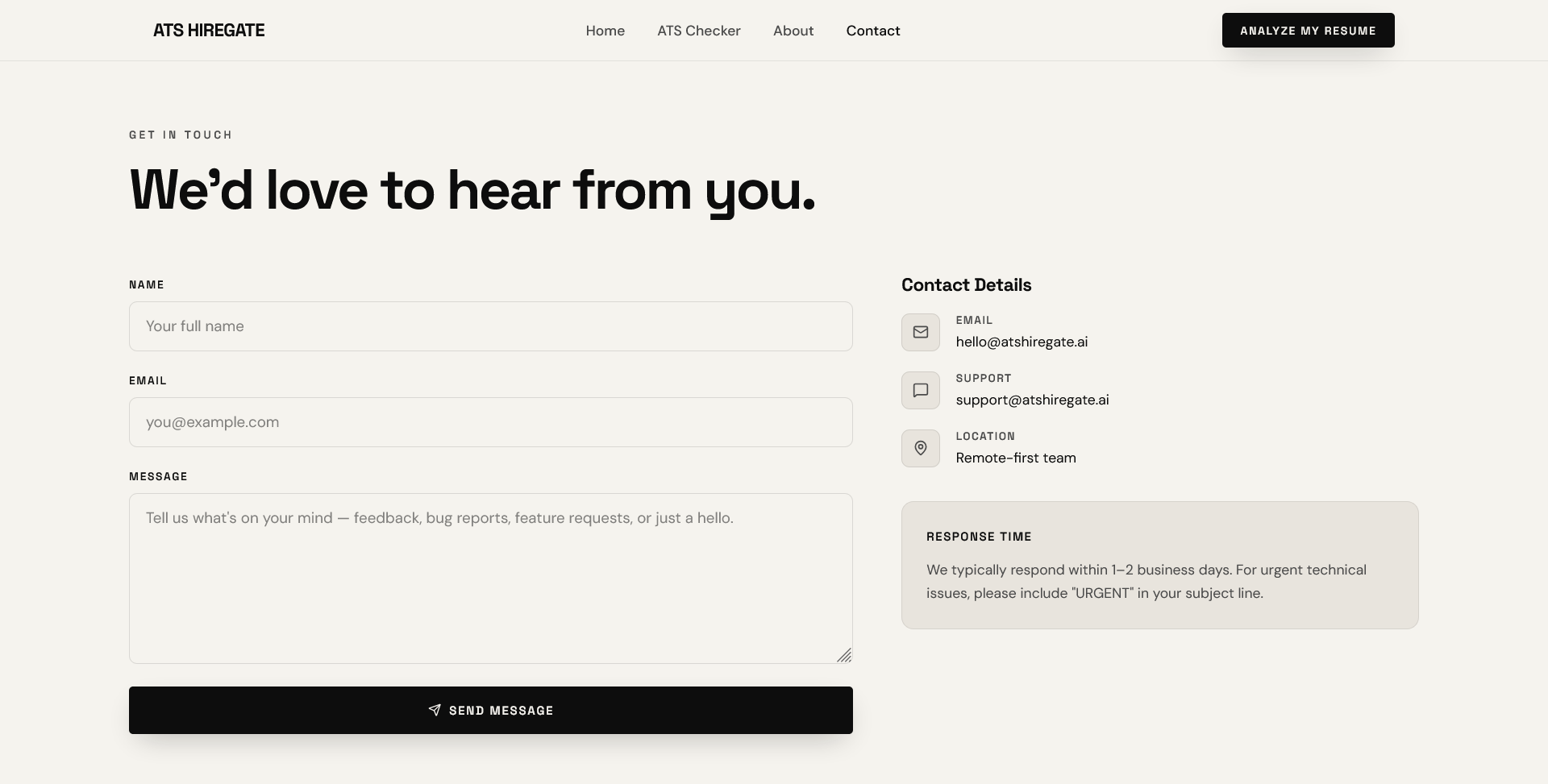
A simple message form paired with contact details and an expectation-setting response-time note.
From idea to implementation
The starting point was a frustration rather than a brief: most resume checkers hand you a number with no reasoning behind it. I wanted a tool that explains the score — which terms are missing, which sections are hard to parse, and what to write instead.
I designed the surface first — a hero that states the problem plainly, a scanner reduced to two inputs and one button, and supporting pages that teach the method instead of selling it. The interface stays quiet so the results can be loud.
Building it with Antigravity changed how I work. I started vibe coding this year, and this project is where it turned from an experiment into a process: describe the intent, review the output like a designer, then keep only what earns its place.